By Elliot Anderson-Evans, Co-founder and RICS Surveyor, Elliot & Hill
Is Rhiwbina a nice place to live? It is a question we are asked often, and the honest answer is that few suburbs in South Wales offer quite the same combination of architectural character, genuine green space, and practical city access as this one does.
Rhiwbina sits in the north of Cardiff, roughly four miles from the city centre, and it has held on to something that many suburban areas have gradually lost: a sense of place. There is a reason buyers who move here tend to stay, and a reason those who grew up here often return. This guide sets out what life in Rhiwbina actually looks like, from the streets and schools to the property market and what a surveyor tends to find when they walk through the door.
The History Behind the Character
In 1912, the Cardiff Workers’ Cooperative Garden Village Society commissioned the architect Raymond Unwin, one of the leading figures of the Garden City movement, to draw up a masterplan for a new residential development on farmland to the north of the city. The first 34 houses were completed in 1913. By the early 1920s, 189 homes had been built across tree-lined avenues, including Pen-y-Dre and Lon Isa, each with its own garden, running water and gas supply: standards that were far from common at the time.
The development was designated a Conservation Area in 1976, as recorded in the RCAHMW national heritage database, and by 2001, most of the original Garden Village homes had been listed by Cadw at Grade II for their special architectural and historic interest. Both designations have done much to preserve the coherence that makes the area distinctive today.
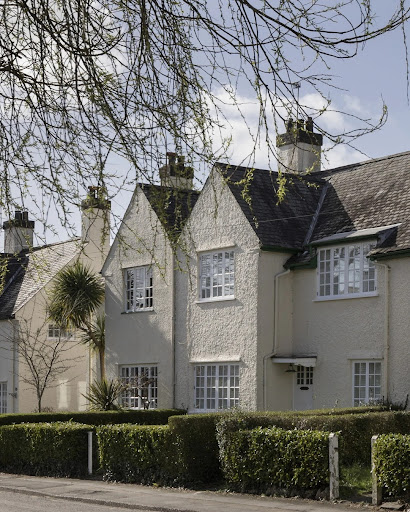
In his Glamorgan volume of The Buildings of Wales, architectural historian John Newman describes Rhiwbina Garden Village as the most extensive and best-preserved Garden Village in Glamorgan. Walking through it, that assessment is easy to believe. The roughcast render, hipped slate roofs and wide verges were designed as an integrated whole, and that integrity remains clearly visible, which tends to be reflected in how buyers and valuers approach properties in the area.
What the Area Feels Like Day to Day
Rhiwbina has a village quality that is not typical of Cardiff suburbs. The high street, centred on Heol-y-Deri, has enough independent shops, cafes and local services to make it genuinely self-contained for everyday errands without ever feeling like a destination. It is a working high street used by the people who live there.
The community is well-established and notably active. There is a recreation club, a library, a range of community groups and a strong tradition of local events that give the area a social infrastructure most suburbs lack. The Garden Village has long drawn academics, artists and those in public life: Iorwerth Peate, the founder of St Fagans National Museum of History, was among its notable residents. It is a place that has consistently attracted people who care about where they live.
That said, it is residential and settled in character, which is precisely what many buyers are looking for, but those seeking a livelier, more urban atmosphere will find it elsewhere in Cardiff rather than here. That is an honest assessment, and worth making early.
Green Space and the Outdoors
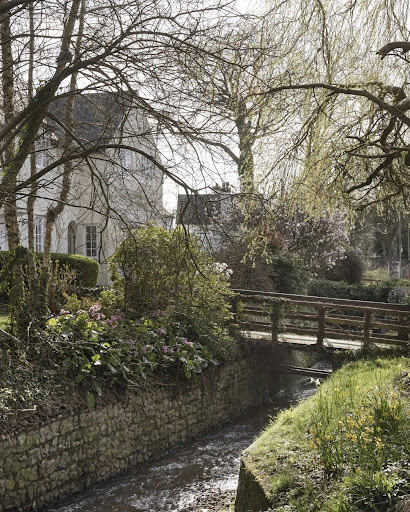
One of Rhiwbina’s most tangible advantages is the quality and quantity of green space within walking distance. Coed y Wenallt, a 44-hectare area of ancient woodland designated as a Site of Special Scientific Interest, borders the northern edge of the suburb and is accessible on foot from most streets in the area. Its ancient oak canopy, the scheduled Iron Age enclosure at the summit and well-marked paths make it genuinely interesting terrain rather than a generic green space, and it is large enough to feel properly removed from the city even though Cardiff Central is around fifteen minutes away by train.
Caedelyn Park provides a more formal open space within the suburb itself, and the wider network of paths connecting Rhiwbina to neighbouring green corridors means that residents with dogs, young children or simply a habit of walking have more than adequate options close to home. The M4 forms a natural boundary to the north, which has had the unintended benefit of restricting suburban sprawl in that direction and preserving the green fringe that gives this suburb much of its character.
Schools
In our experience, schools come up in almost every conversation we have with buyers considering Rhiwbina, and the provision at both primary and secondary levels is strong enough to justify it.
At the primary level, Rhiwbeina Primary School on Lon Ucha is the main catchment school for the area. It is an English-medium community school with a nursery unit, with attendance figures of 95.8% against a Welsh national average of 92.2%, according to Estyn’s inspection record for Rhiwbeina Primary, which reflects a settled and engaged pupil community. Ysgol Gymraeg Melin Gruffydd, the local Welsh-medium primary, is also accessible for families seeking Welsh-language education from the outset.
At secondary level, Rhiwbina falls within the catchment of Whitchurch High School, one of the largest comprehensive schools in Wales, with approximately 2,500 pupils on roll. The school is consistently oversubscribed, which in itself reflects the level of parent confidence in it. Cardiff High School on Cyncoed Road, rated Excellent by Estyn with attainment described as consistently very high and well above expectations, is also within reach for families prepared to look beyond the immediate catchment, a roughly 15-minute drive.
School catchments in Cardiff are subject to review, and boundaries do not always align with assumptions based on proximity. Confirming your catchment position directly with Cardiff Council before the exchange of contracts is a practical step, not an optional one.
Getting Around
Rhiwbina has its own station on the Coryton Line, operated by Transport for Wales, which connects directly to Cardiff Queen Street and Cardiff Central. The journey time to Cardiff Central is around 15 minutes, and the line runs throughout the day. Annual passenger numbers at the local station have risen from around 33,000 in 2021/22 to nearly 82,000 in 2024/25, according to the Office of Rail and Road station usage statistics, a near-tripling that reflects increased use of the service across the period.
As of early 2026, there is active campaigning for increased frequency on the Coryton Line, with a commitment sought to double services from two to four trains per hour as part of the South Wales Metro programme. The current frequency of two trains per hour is worth factoring in if you depend on rail for a daily commute, particularly compared with stations on higher-frequency routes elsewhere in Cardiff.
Several bus routes also serve the area, providing connections to the city centre and to neighbouring suburbs including Whitchurch, Birchgrove and Llanishen. For drivers, the A470 runs through the western edge of the area and gives straightforward access to the motorway network.
Property in Rhiwbina
The property mix in Rhiwbina is broader than many assume. While the Conservation Area streets of the Garden Village are the most architecturally distinctive, the wider suburb includes a range of mid-century semis, detached family houses, bungalows and a smaller number of apartments and maisonettes.
According to data from Bricks and Logic updated to early 2025, the average property price in Rhiwbina is approximately £404,698, with a range running from around £263,000 at the lower end to over £696,000 for the largest homes. Analysis from Hutch puts the average house price at around £385,000, with two-bedroom homes averaging £251,000, three-bedroom homes around £318,000 and four-bedroom homes around £493,000. Around 95% of houses in the area include a garden, which matters both to lifestyle and to long-term appeal as a family home.
Properties on Garden Village streets, given their Conservation Area and listed status and the relative scarcity of homes that come to market within them, tend to be priced above the wider Rhiwbina average, though individual values depend on condition, plot and presentation.
Property types at a glance:
| Type | Share of housing stock | Indicative range |
| Semi-detached | 40% | £280,000–£500,000 |
| Detached | 26% | £400,000–£750,000+ |
| Terraced | 25% | £250,000–£380,000 |
| Flats and other | 9% | £150,000–£220,000 |
Price ranges are indicative and reflect typical recent sales. Individual properties vary considerably depending on condition, plot size and street. These figures should not be relied upon in place of a professional valuation.
What a Surveyor Tends to Find Here
Rhiwbina’s housing stock carries specific characteristics that are worth understanding before you buy, particularly in the older parts of the area.
The original Garden Village homes are solid wall construction, which affects insulation options, condensation patterns and the approach to any future energy efficiency improvements. They were also built to precise co-operative standards with shared design details, meaning any visible alteration, from windows to rooflines, requires both Listed Building Consent and Conservation Area approval. Works carried out without the necessary consents can represent a legal liability, and it is worth establishing the consent history of any property before you exchange. A solicitor can advise on whether indemnity insurance or regularisation is appropriate in individual cases.
The broader suburb includes a significant proportion of mid-twentieth-century houses, many of which have been extended over the decades. Flat-roofed rear extensions, original steel windows and ageing drainage are common inspection points in this building stock. None of these is an unusual finding, but they are worth pricing into a purchase rather than discovering after.
If you are buying in Rhiwbina and would like an informed view of what a pre-purchase survey is likely to reveal, our home survey service covers Level 2 and Level 3 inspections for properties across South Wales, carried out by an RICS-regulated surveyor.
Is Rhiwbina Right for You?
Rhiwbina works well for families who want good schools, walkable green space and a genuine community without sacrificing access to a capital city. It works well for buyers who value the character of the built environment and want a home embedded in a coherent place rather than an interchangeable suburb. And it works for those who are prepared to pay a considered premium for an area that has held its quality over time.
It is less suited to buyers who need fast, frequent public transport in multiple directions, or who want the energy of a more urban neighbourhood. Those are real trade-offs, not minor ones, and they are worth being clear about before you commit.
What Rhiwbina offers in return is an area whose character was designed in from the start, not applied retrospectively, and that distinction is evident in everything from the street widths to the way the houses relate to their gardens. Character like this is not retrofittable. It is either there from the beginning, or it is not.
If you are considering buying in Rhiwbina and would like to speak to us, we would be glad to help. Visit our Rhiwbina estate agency page to find out more about how we work with buyers in the area.
The information in this article is provided as general guidance only. It does not constitute financial, legal, property or planning advice. Figures and details are based on information available at the time of publication and may change. We recommend seeking independent professional advice before making decisions based on your individual circumstances.